SOLUTION
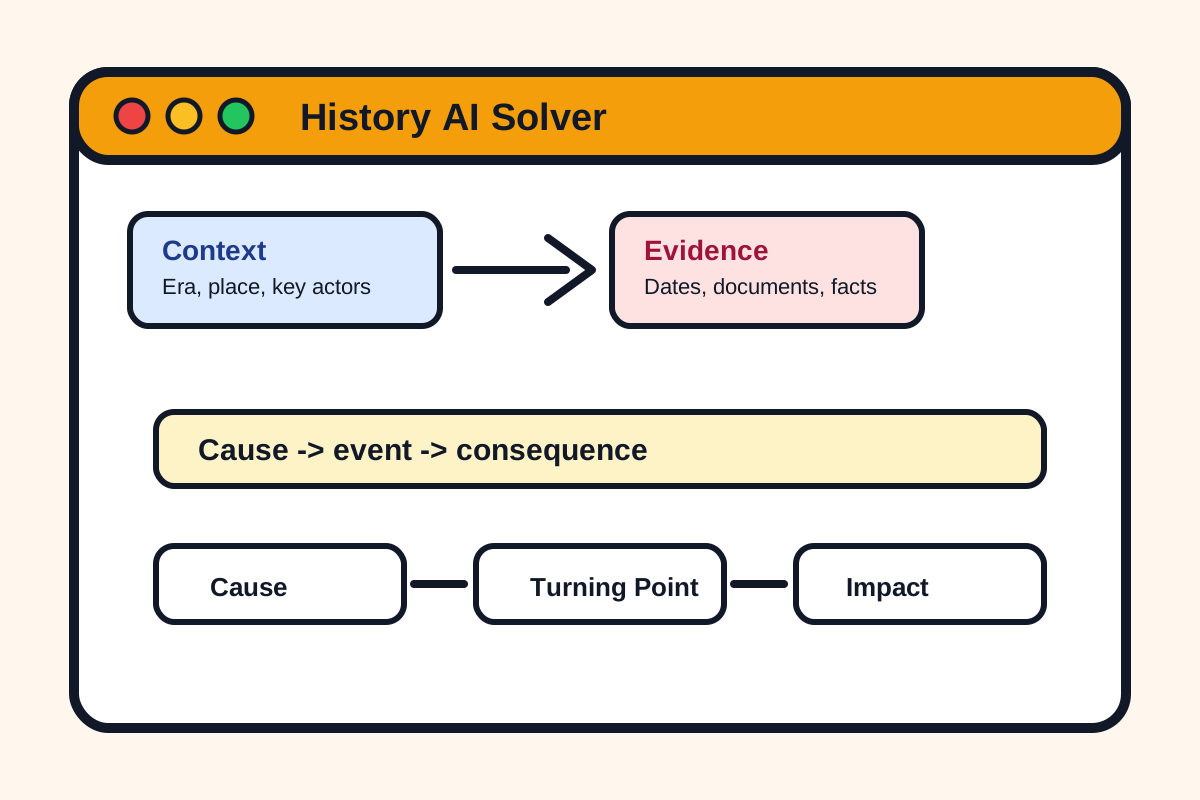
See the argument laid out
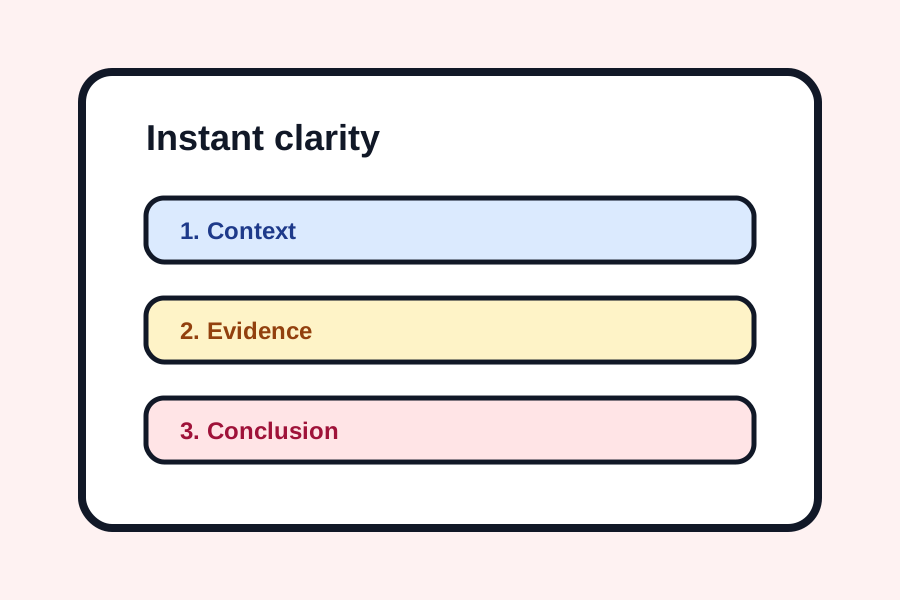
Request a direct analysis of the question, with relevant context and reasoning.
- Context for the specific question
- A conclusion with supporting reasoning
- Follow-ups about disputed points
History AI goes beyond knowing when an event happened to examine why it mattered.
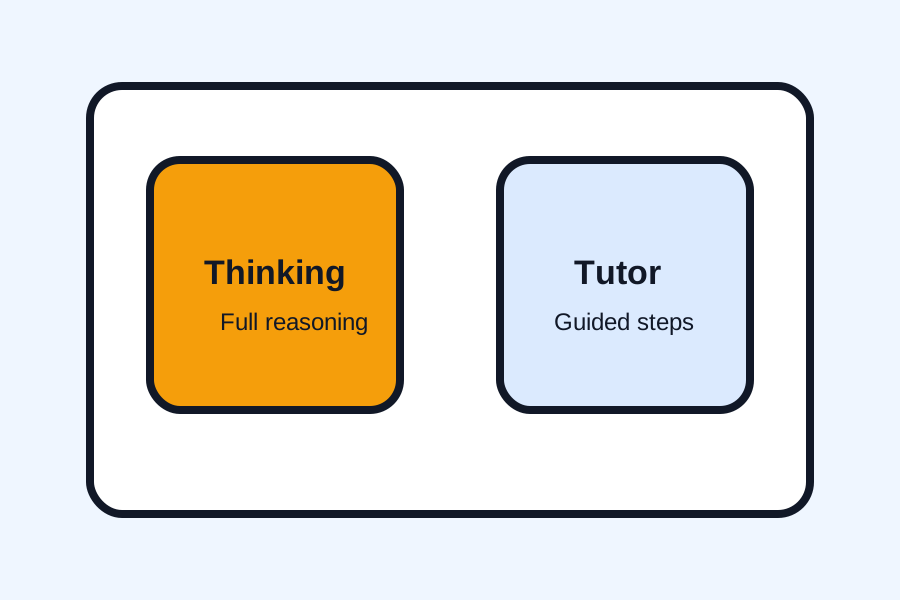
Read an organized explanation, or work through a question with an AI history tutor that asks you to make the next interpretive decision.
Request a direct analysis of the question, with relevant context and reasoning.
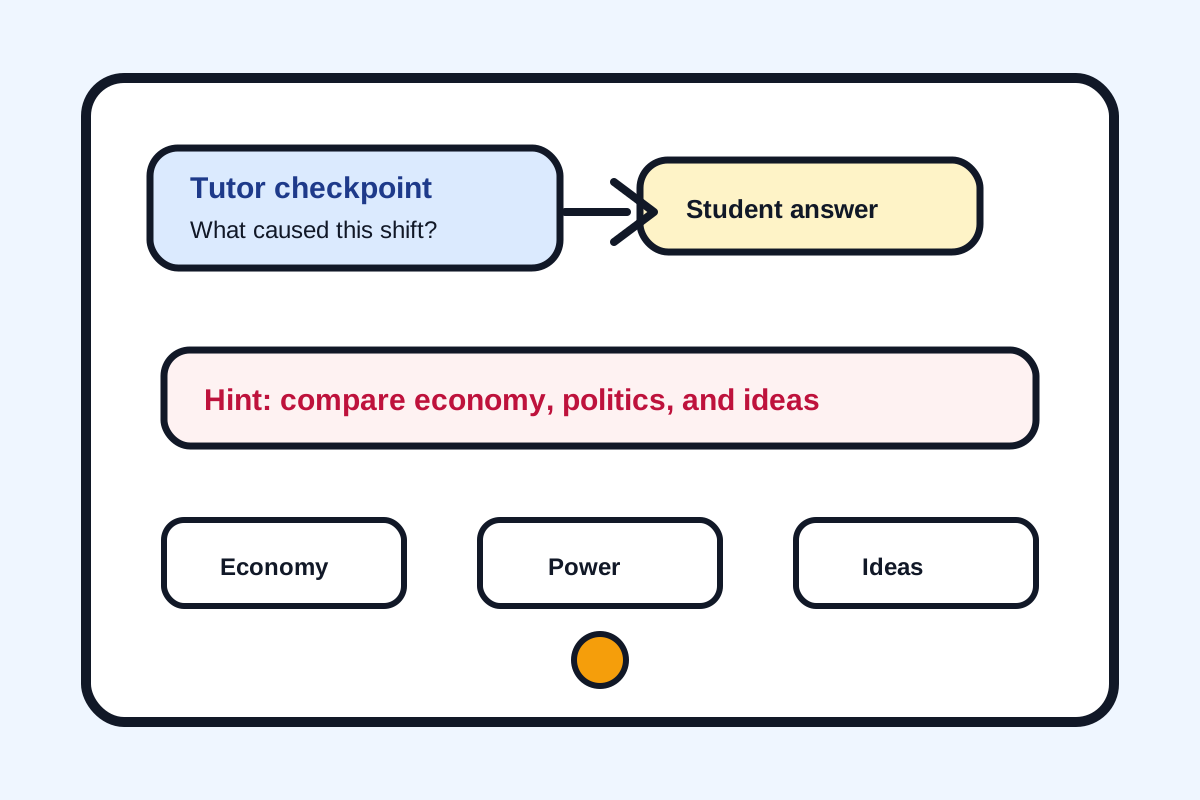
Work from an excerpt or your current thesis and consider one focused question at a time. You might identify a document’s intended audience before assessing its usefulness. Tutor Mode requires eligible paid access and adapts to your replies.
An illustration can help you discuss sequence or relationships. History’s answer-linked image option is a separate 12-credit request; treat the resulting image as a study aid, not an authenticated historical source.
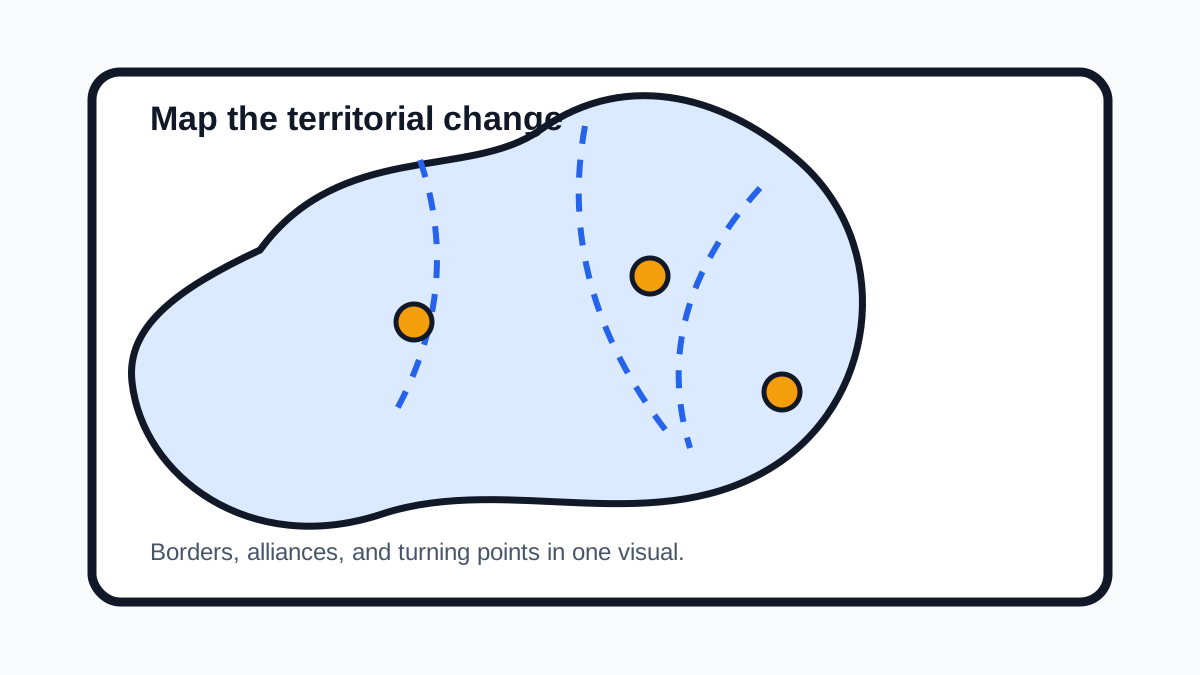
A conceptual visual can help organize a spatial question. Verify boundaries, labels, and locations against a reliable atlas rather than treating generated geography as authoritative.
Use an illustrated sequence to discuss which events precede others. Check the dates separately and remember that an arrow between events does not establish causation.
Ask for a textual comparison of supplied evidence when exact figures matter. Do not use an illustrative chart as a dataset or infer precise measurements from its appearance.
An AI history tutor works best from a bounded question and the material you are expected to use.
“Describe,” “compare,” and “evaluate” ask for different work. Include the exact prompt so the discussion can address its task, period, and scope. Check whether a proposed answer actually makes the judgment requested or merely summarizes the topic.
Try History AI
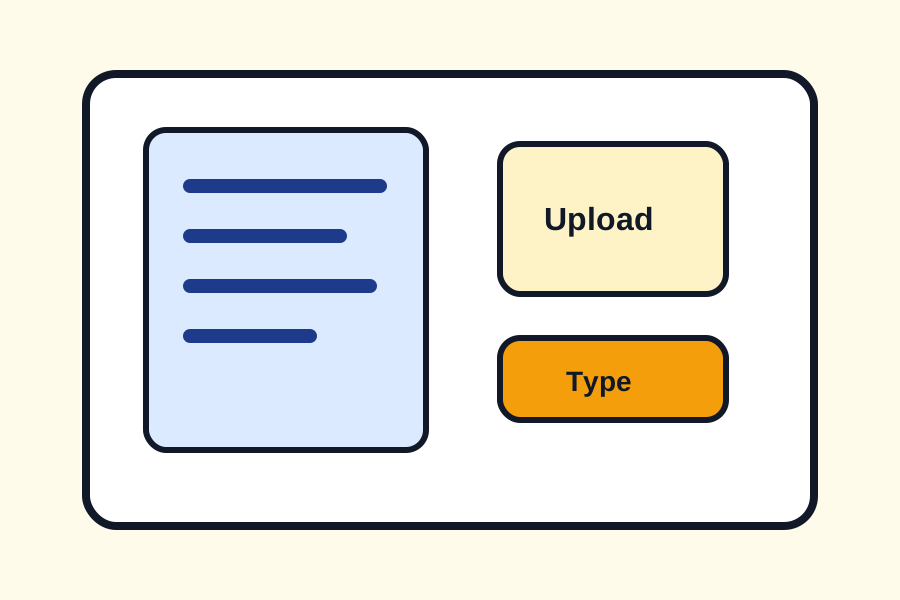
Paste the relevant passage or upload a readable photo with its attribution. The author, date, and surrounding context may change how a sentence should be interpreted. If a line cannot be read clearly, transcribe it rather than leaving the wording to guesswork.
Try History AI
Show your thesis and the passage you think supports it. Ask where the reasoning moves beyond what the source establishes. A useful follow-up might narrow the claim, identify a missing connection, or distinguish a plausible inference from a documented fact.
Try History AI
Name the region, dates, and issue under discussion. A question about industrialization could concern work, migration, politics, or trade. A defined scope leaves room for relevant detail and prevents a broad overview from standing in for the analysis your course requires.
Try History AI
Ask how another interpretation would explain the same evidence and where the disagreement lies. Compare the reasoning with your assigned readings. The aim is to understand the argument and its limits, not to turn a contested historical question into a falsely certain answer.
Try History AI
A little context at the start gives the discussion a clearer direction.
These areas suggest where to begin; provide the precise historical setting and the materials your course uses.
Use an AI history tutor to explore institutions, exchange, belief, or social change across selected societies. State the basis of comparison so similarities do not erase important differences in time and place.
With History AI, examine the relationship between events, policy, and lived experience. Distinguish an immediate outcome from a longer development, and identify whose perspective the available evidence represents.
Ask History AI to trace an argument about political ideas, conflict, or cultural change. For historiography, provide the historians’ actual claims so the discussion compares their reasoning rather than inventing positions for them.
Know what the conversation can help you examine and what still needs verification.
Bring the question and the evidence you have. Examine the context, challenge the inference, and develop an argument you can explain in your own words.
Free plan available • Upgrade anytime