Biology AI
for Understanding How Living Systems Work

Biology AI can take a correct term as the beginning. Bring the question, your working, or a readable diagram and explore how the parts connect. Ask for an explanation of the process, or take an active role in building the answer.

TRY ONE CLICK

Choose how to work through the biology

Read a complete explanation when you need the overall picture, or use guided questions to investigate the part you do not yet understand.

SOLUTION
Illustrated scroll showing a cellular-respiration sequence beside a lightning bolt

Biology AI: Follow the process from start to finish

Use the biology AI solver to examine the question and the reasoning behind an answer. For a transport problem, that might mean identifying the substances, concentration difference, and membrane conditions before naming the process. Include your own attempt if you want attention directed to a particular assumption or step.

  • Essential concepts in context
  • Image or typed-question input
  • Relevant steps and assumptions
  • A response you can question further
TUTOR MODE
Illustrated robot and student climbing a staircase made of books

biology AI solver: Build the explanation one decision at a time

The biology tutor AI approach starts from your current progress and uses a focused checkpoint to move forward. You might identify the possible gametes before calculating an inheritance ratio. Reply with your reasoning so the next step can address your actual uncertainty. Tutor Mode requires eligible paid access; you can request the complete explanation when needed.

  • One focused checkpoint per turn
  • Guidance based on your reply
  • Room to explain your reasoning
  • The full answer on request

Biology AI: Look for the mechanism, not just the vocabulary

Biology AI helps connect what you observe with the process that could account for it. Give the conversation enough detail to examine that connection.

Biology AI: Ask what changes and why

Instead of asking only for a definition, describe what you want to explain: a cell changing shape, a trait appearing in offspring, or a population declining. Ask which mechanism connects the starting conditions to the outcome. Distinguish a possible explanation from something established by the evidence.

Try Biology AI
Illustrated laptop and notebook showing cells, DNA, and other biology subjects

biology AI solver: Put the diagram beside the question

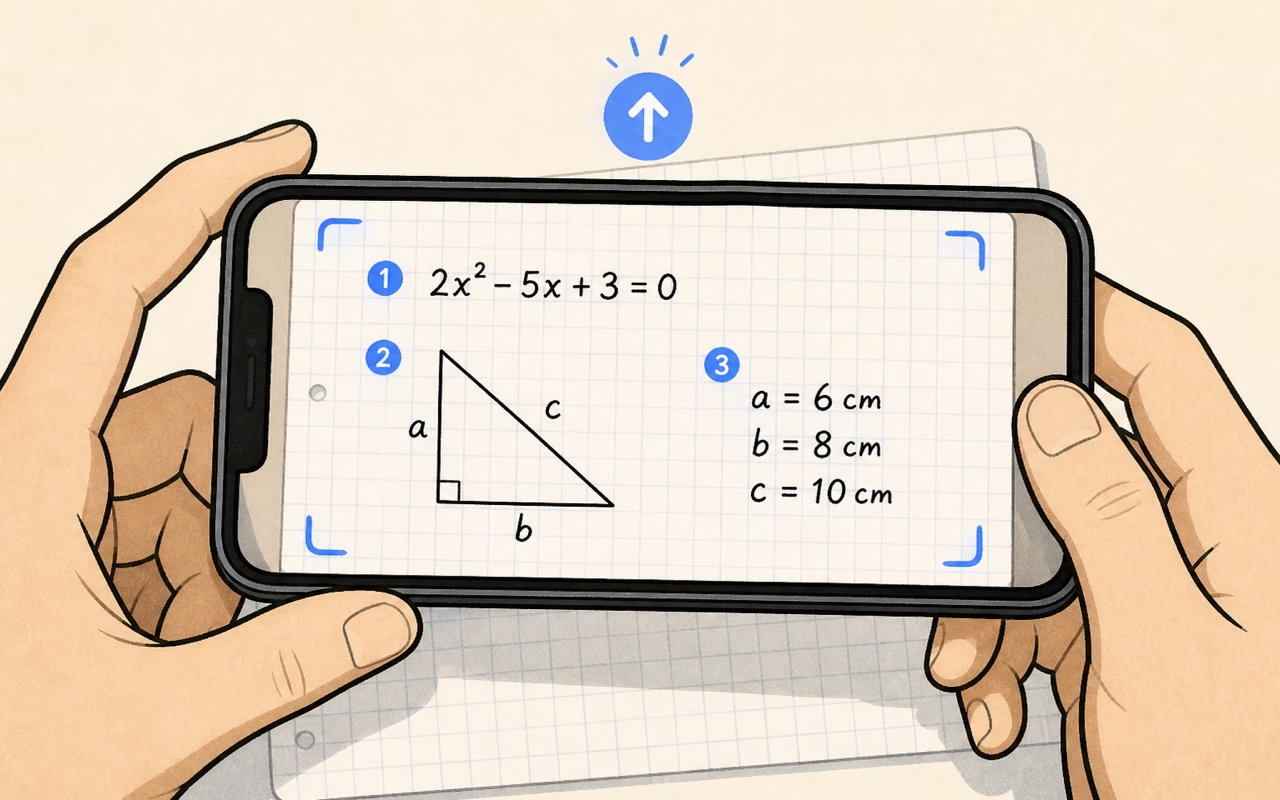
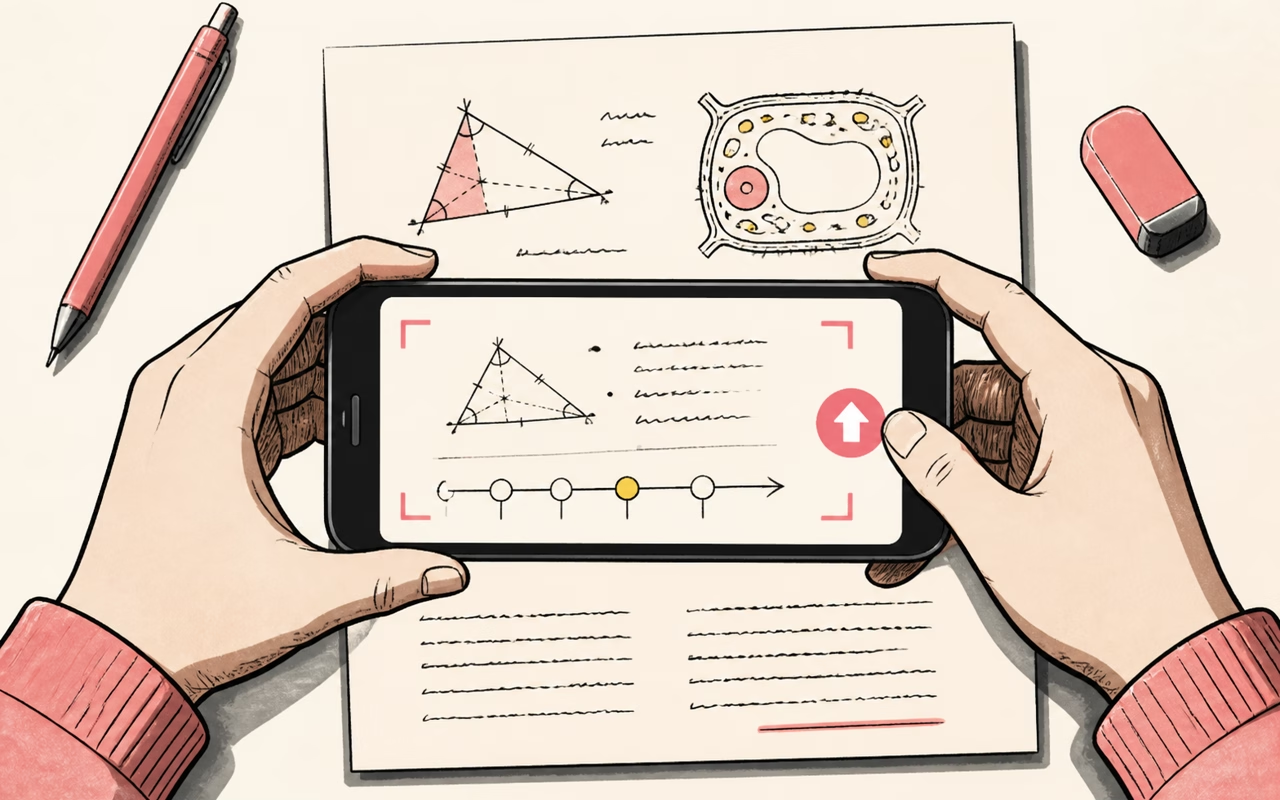
Upload the image with its labels, legend, and surrounding instructions visible. Add text if a symbol is unclear or the question refers to information outside the frame. A readable image can preserve relationships that are difficult to describe; it does not remove the need to check how the image was interpreted.

Try Biology AI
Illustrated phone framing biology notes and cell diagrams

Biology AI: Show the reasoning you already have

Paste your attempt and name the first point that feels uncertain. The conversation can focus on a missing connection, such as confusing chromosome number with DNA content, while keeping your correct starting work in view. Compare the explanation with your course notes before revising your answer.

Try Biology AI
Illustrated cell-division sequence and inheritance grid beside a notebook

biology AI solver: Tell the chat which level matters

A question about respiration could concern an organ system, a cell, or a biochemical pathway. State your course level and the scale you are studying. This helps frame the explanation without assuming that a longer or more technical answer is the one your assignment requires.

Try Biology AI
Biology study illustration connecting cells, organisms, and ecosystems

Biology AI: Keep investigating in the same conversation

Ask what would change under a different condition, or request clarification of one term in the answer. Signed-in conversations can be revisited from your history. Each submitted follow-up is another request, so make it specific to the point you want to understand next.

Try Biology AI
Illustrated biology notebook and laptop on a lamp-lit study desk

biology AI solver: Turn a biology question into a useful discussion

Start with the evidence you have and the uncertainty you want to resolve.

Questions across the levels of life

Use these topic areas as starting points, then narrow the request to the relationship or problem you need to understand.

Biology AI: Cells and molecular processes

Use Biology AI to ask how a structure supports its function or how one stage leads to the next. For a pathway, specify the starting material and the part you are studying rather than requesting every detail at once.

MitosisMeiosisDNA ReplicationProtein SynthesisEnzyme KineticsCell SignalingOsmosisGlycolysis

biology AI solver: Inheritance and evolutionary change

With Biology AI, examine genotype assumptions, possible gametes, or the difference between individual traits and population change. State the conditions of the problem so a ratio or explanation can be evaluated in context.

Punnett SquaresHardy-WeinbergNatural SelectionGenetic DriftSpeciationPhylogenetics

Biology AI: Organisms, ecosystems, and experiments

Bring Biology AI a physiological process, an ecological relationship, or a small data table. Ask which variables matter and what the observations support. A trend alone should not be treated as proof of a cause.

Food WebsNiche & HabitatPhotosynthesisRespirationHuman AnatomyImmune SystemMicrobiologyBiostatisticsLab Report Help

Before you ask a biology question

Practical details about access, evidence, and using the explanation.

Understand the connection you were missing

Bring one question and the part you cannot yet explain. Work through the biology, then check whether you can describe the mechanism yourself.

Explore my biology question

Free plan available • Upgrade anytime